
Branding5 min read
Brand Identity: The Elements Every Business Needs
The building blocks of a brand identity, from logo and colours to type, imagery and templates, and how they fit together.
We use necessary cookies to make the site work. With your permission, we'd also like to use analytics cookies to see how people use the site, and advertising cookies to measure our ads. You can change your mind at any time. Cookie policy
A brand only stays consistent if everyone knows how to use it. Brand guidelines explain your logo, colours, type, imagery and voice in one place. This guide covers what to include and how to make guidelines people actually use.
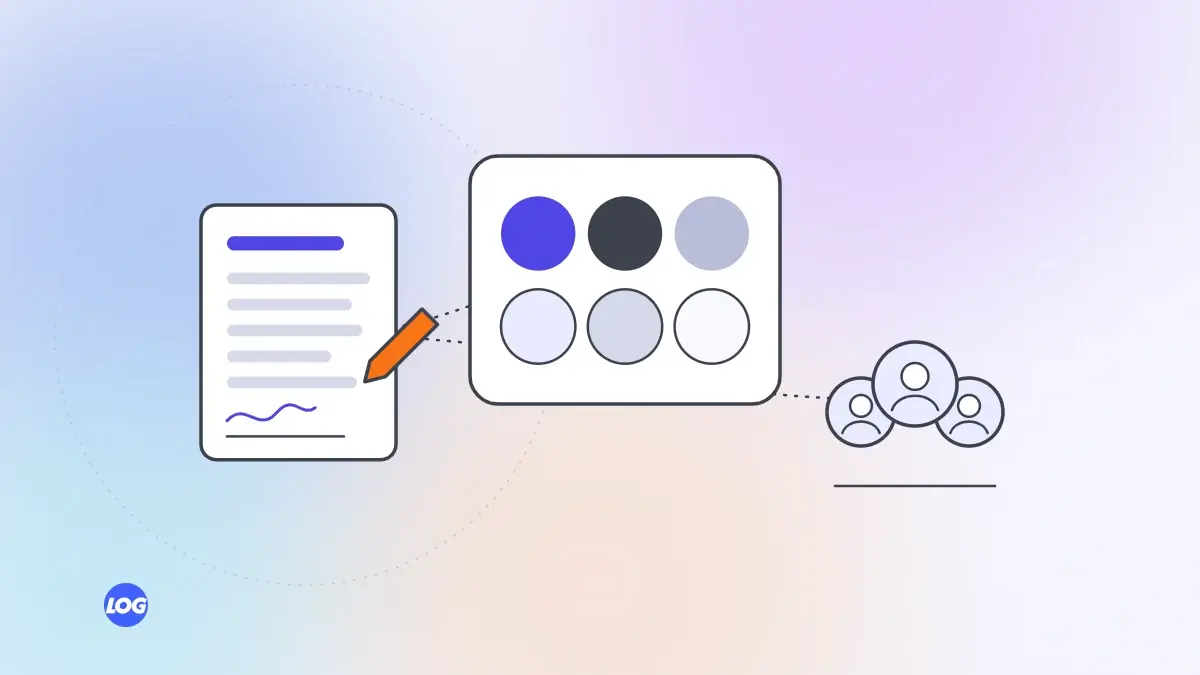
Without guidelines, a brand slowly drifts: the logo gets stretched, colours change from printer to printer, new staff invent their own styles and social posts look different every week. Brand guidelines prevent this by explaining how to use your brand in one practical document. They do not need to be long; they need to be clear and easy to follow.
Write for people who are not designers.
1. Brand basics. A short summary of who you are, who you serve and what you stand for. This helps people make good decisions when the rules do not cover a situation.
2. Logo. Every version, with:
3. Colours. Exact codes for screen and print, plus which combinations are readable and which to avoid.
4. Typography. Typefaces for headings and body text, sizes, weights and fallbacks for systems where your font is not available.
5. Imagery. Examples of good and bad photos, style notes and guidance on using real photos of your work and team.
6. Graphic elements and icons. How to use patterns, shapes and icons consistently.
7. Voice and tone. Your voice words with contrasts, writing rules and examples of real messages.
8. Applications. Examples of the brand in use: social posts, website, signage, documents, packaging and email signatures.
Guidelines are far more useful when they come with:
Keep everything in one shared folder.
Someone in the business should own the brand: answering questions, approving unusual uses and updating the guidelines. Without an owner, small exceptions pile up until the brand looks inconsistent again. In a small business this can be the founder or the person responsible for marketing.
If you work with partners, distributors or event sponsors, add a short section on how your logo appears next to theirs: equal sizes, spacing and which version to use on their materials. This avoids awkward results on banners and joint documents.
Store guidelines in a shared drive or simple web page that everyone can access. Send them to new staff, suppliers and agencies at the start of every project.
Review guidelines when you add new services, channels or materials, and at least once a year. Add new examples as your brand grows.
When you work with digital marketing firms or freelancers, share your guidelines on day one, so their work fits your brand from the start. Our branding service delivers practical guidelines with templates and files ready to use.
Our brand guidelines are written for people who are not designers. Each section shows examples side by side with what to avoid, and the guide comes with a shared folder of logo files, colour codes, fonts and templates.
We keep the core guide short enough to read in one sitting and walk the client's team through it. When new materials are created, we add them as examples, so the guide grows with the brand.
Brand guidelines are a practical document explaining how to use your brand correctly: logo rules, colours, typography, imagery, voice and examples, usually with files and templates.
Yes, even a short version helps. As soon as more than one person or supplier creates materials, guidelines keep your brand consistent and save time.
Long enough to cover the essentials, short enough that people read them. Many businesses do well with a concise guide plus templates and files.
Logo files in all needed formats, colour swatches, font files or links with licence details, and templates for social posts, presentations and documents.
At least once a year, and whenever you add new services, channels or types of material. Add new examples as your brand is used in more places.
Branding5 min read
The building blocks of a brand identity, from logo and colours to type, imagery and templates, and how they fit together.
Branding5 min read
What branding really means for a small business, and a simple plan to build a brand customers remember and trust.

Branding4 min read
How to define the way your business speaks, write simple rules and examples and keep everyone sounding consistent.